
Metal and Inorganic Coatings Laboratory

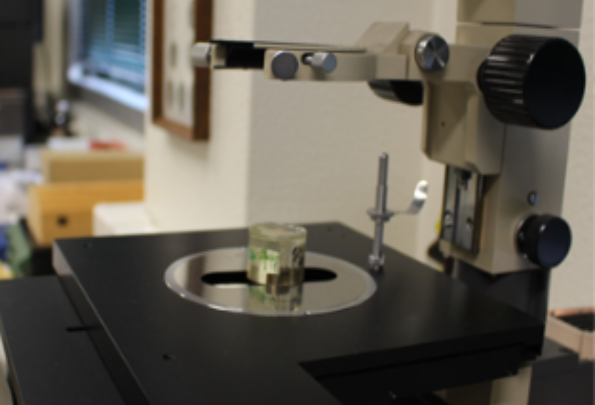
The Metal and Inorganic Coatings Laboratory (UMRI) is integrated in the Materials Department/ Organic and Metallic Unit of LNEC (DM/NMOM). It has been an IPAC-accredited body (Technical Annex L0116) since 1994.
Metallic materials are extensively used in civil engineering for bridges, viaducts, dams, and buildings, both for structural and aesthetic purposes. UMRI's activity focuses mainly on the chemical and physical characterization of materials used in construction, as well as on the development and qualification of new products, contributing to the durability and safety of structures.
Additional information can be found in this laboratory's flyer.
Activity areas
UMRI carries out experimental activities within the framework of the chemical and physical characterization of metals and metallic coatings, including classical and instrumental chemical analysis and physical characterization of metallic and anodic coatings, using both destructive and non-destructive methods, in particular:
- Chemical analysis: determination of the content of several elements in metals and metal alloys;
- Inorganic and anodic coatings: measurement of coating thickness;
- Metallic and anodic coatings: determination of coating thickness by gravimetric method;
- Anodic coatings: verification of sealing quality
The activity of UMRI is mainly focused on the certification of metallic products and quality control of materials applied on-site. This laboratory also performs tests for controlling the factory anodising procedures within the framework of the QUALANOD Quality Label, for sulfuric acid-based aluminium anodizing. In this context, it is the only European laboratory that performs the abrasive wheel test.
Testing
UMRI is accredited by IPAC (L0116 technical annex) for carrying out tests in the domain of certification of metals, metallic products and inorganic coatings, in particular:
- Chemical composition analysis of C, Si, Mn, P, S, Cr, Ni, Cu, and V (ASTM E415-14);
- Analysis of C and S (ASTM E1019-11);
- Measurement of coating thickness – Foucault currents method (NP EN ISO 2360:2005);
- Measurement of coating thickness – Micrographic cut method (EN ISO 1463:2004);
- Estimation of the loss of absorptive power of anodic oxidation coatings after sealing with prior acid (EN ISO 2143:2010);
- Assessment of the quality of sealed anodic oxidation coatings by measurement of admittance (admittance < 200 μS)( EN ISO 2931:2010);
- Assessment of the quality of sealed anodic oxidation coatings by measurement of the loss of mass after immersion in phosphoric acid/chromic acid solution with/ without prior acid treatment (EN ISO 3210:2010);
- Determination of the mass per unit area and the average coating thickness – Gravimetric method (NP EN ISO 1460:1997);
- Coating adhesion test method (NP 526:1988).
Other services
UMRI also provides support to studies requested by different public or private bodies, construction stakeholders, infrastructure owners and producers of construction products, in particular:
- Development and qualification of new products;
- Expertise in pathologies of materials;
- Characterization of materials and products.